


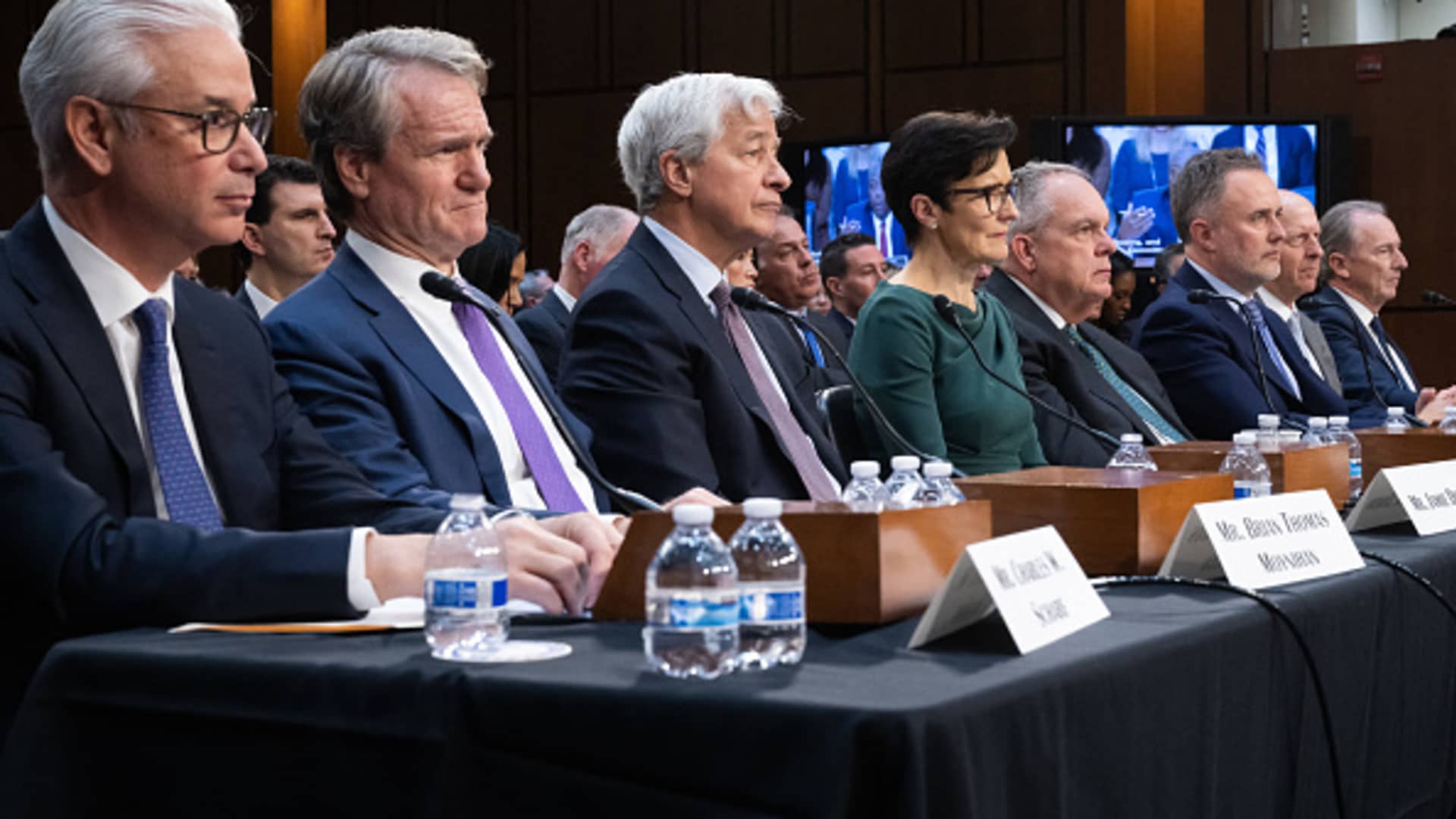
(L-R) Wells Fargo CEO and Chairman Charles Scharf, Brian Bank of America Chairman and CEO Thomas Moynihan, JPMorgan Chase Chairman and CEO Jamie Dimon, Citigroup CEO Jane Fraser, State Street CEO Ronald OÕHanley, BNY Mellon CEO Robin Vince, Goldman Sachs CEO David Solomon, and Morgan Stanley CEO James Gorman testify during a Wall Street oversight committee hearing Banking, Housing, and Urban Affairs panel on Capitol Hill in Washington, DC, on December 6. 2023.
Saul Loeb | AFP | Getty Images
Bank executives were sent scrambling this weekend after President Donald Trump said Friday night that U.S. credit card companies would be subject to a 10% cap on the interest rate they can charge their customers.
The move sent shares of major banks including Citi Group, JPMorgan Chase, Wells Fargo And Bank of America down between 1% and 4% in premarket trading Monday. Companies more closely tied to the cards industry, such as Visa, MasterCard And American Expressalso fell. Capitol Onewhose loan portfolio comes primarily from credit cards, fell 7% in premarket trading.
Trump proposed a one-year cap on interest rates starting January 20. While it’s unclear exactly how it would be implemented, the industry’s message is clear: The plan would bring unintended consequences for consumers and the U.S. economy.
Banks and analysts say the move would make much of the credit card industry unprofitable, particularly for customers with less than ideal credit profiles. Rather than offering loss-making products to consumers, the industry would simply stop offering access to customers with subprime credit, along with a series of other changes around card programs, including a reduction in rewards, insiders say.
Consumers would spend less or rely on other forms of unsecured debt, they say.
“We can’t offer products at a loss; there is no scenario where we would take our entire portfolio to 10%,” said a person with knowledge of the operations of a major bank, who asked to remain anonymous to speak candidly. “It’s not an exaggeration to suggest that this is going to sink the economy very quickly.”
Industry trade groups released a joint statement late Friday to defend their cause.
“Evidence shows that a 10 percent cap on interest rates would reduce the availability of credit and be devastating for millions of American families and small business owners who rely on and value their credit cards, the very consumers this proposal aims to help,” the trade groups said.
Complicating matters is that bankers aren’t sure how Trump’s interest rate cap would apply. The simplest approach, via legislation in Congress, is not possible before the proposed Jan. 20 start date, according to Tobin Marcus, head of U.S. policy at Wolfe Research..
Other means of enforcement, through banking regulators, including the Consumer Financial Protection Bureau, are also possible. But the Trump administration repeatedly tried to shut down the agency, and the industry successfully defeated the CFPB’s rules in court.
“I don’t know of any authority that they could use to do this unilaterally and dramatically,” Marcus said.
“As far as I know, telling them they have until January 20 is an attempt to create pressure and get them to do it voluntarily,” he said.
This story is developing. Please check again for updates.