



TAIPEI, Taiwan — Japanese clothing giant Uniqlo does not use cotton from China’s Xinjiang regions, the company’s boss said in his first public statement on the issue.
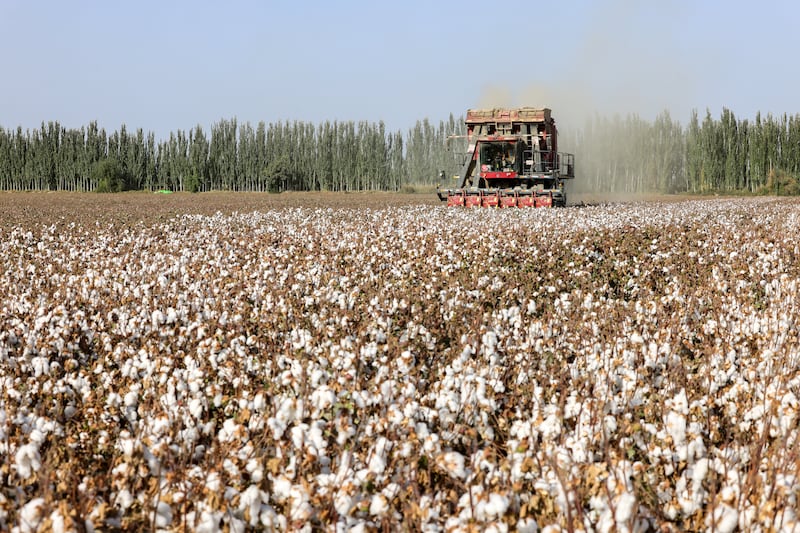
The global fashion retailer faces intense scrutiny over its sourcing practices, amid allegations of human rights abuses in the supply chain and concerns about forced labor in Xinjiang, which produces some of the world’s best cotton.
“We don’t use [cotton from Xinjiang]Tadashi Yanai, chief executive of Uniqlo parent company Fast Retailing, told the BBC on Thursday, breaking his silence on sourcing fabrics for his brand’s clothing.
“By mentioning the cotton that we use… actually it gets too political if I say more, so let’s stop there,” he said, without adding further details.
Companies that buy products from Xinjiang, including clothing and cotton, have faced pressure from Western governments over the alleged genocide of the Uyghur and Hui Muslim minorities under Xi Jinping’s leadership over the past decade.
This prompted Western countries, led by the United States, to impose stricter regulations on the importation of goods from Xinjiang in 2022. Several global brands, such as H&M and Nike, have removed products using Xinjiang cotton from their shelves, expressing concern over the alleged use of forced labor.
Uniqlo had remained neutral “US-China” on the conflict in Xinjiang, even though its parent company had previously said the retail giant did not use any materials linked to human rights abuses.
China has repeatedly denied allegations of “crimes against humanity,” calling them “the lie of the century.”
A U.S. federal report released in 2022 estimates that Xinjiang cotton accounted for approximately 87% of Chinese production and 23% of global supply in 2020 and 2021.
The Uniqlo boss’s remarks come after German carmaker Volkswagen said on Wednesday it had sold its operations in Xinjiang.
Volkswagen was also accused to allow Uyghur slave labor in its joint venture factory with Chinese state-owned SAIC Motor Corp. in Urumqi, the capital of Xinjiang.
The company cited “economic reasons” to justify its withdrawal from Xinjiang, home to around 12 million predominantly Muslim Uyghurs, where it also has a test track in Turpan.
The automaker announced the move at the same time as it announced it would extend its partnership with Chinese partner SAIC by a decade, until 2040.
RELATED STORIES
Volkswagen sells Xinjiang factory linked to Uyghur forced labor
Fate of Uyghur refugees expelled from Cambodia in 2009 revealed
US bans 29 more Chinese companies from operating over Uyghur slave labor
Volkswagen’s move was hailed by rights groups as a “positive, albeit long overdue, step.”
“Automakers should map their supply chains and divest from any suppliers that source directly or indirectly from Xinjiang,” said Jim Wormington, senior researcher and advocate in the Economic Justice and Rights Division of Human Rights Watch.
The G7 foreign ministers meeting earlier issued a statement expressing concern over the situation of Uyghurs in Xinjiang and Tibetans in Tibet being persecuted by the Chinese government.
The G7, or Group of Seven, includes the major industrial nations – Canada, France, Germany, Italy, Japan, the United Kingdom and the United States – in addition to the European Union.
“We remain concerned about the human rights situation in China, including in Xinjiang and Tibet,” said the statement, which urged China to uphold its international human rights commitments and legal obligations.
Edited by Kiana Duncan.