



German carmaker Volkswagen said Wednesday it has sold its operations in northwest China’s Xinjiang region, where Beijing has been accused of widespread human rights abuses against Uyghurs.
Activists and experts have accused VW of allowing the use of Uyghur slave labor in its joint venture factory with Chinese state-owned SAIC Motor Corp. in Urumqi, the capital of Xinjiang.
In a statement, the company cited “economic reasons” for its withdrawal from Xinjiang, home to around 12 million predominantly Muslim Uyghurs, where it also has a test track in Turpan.
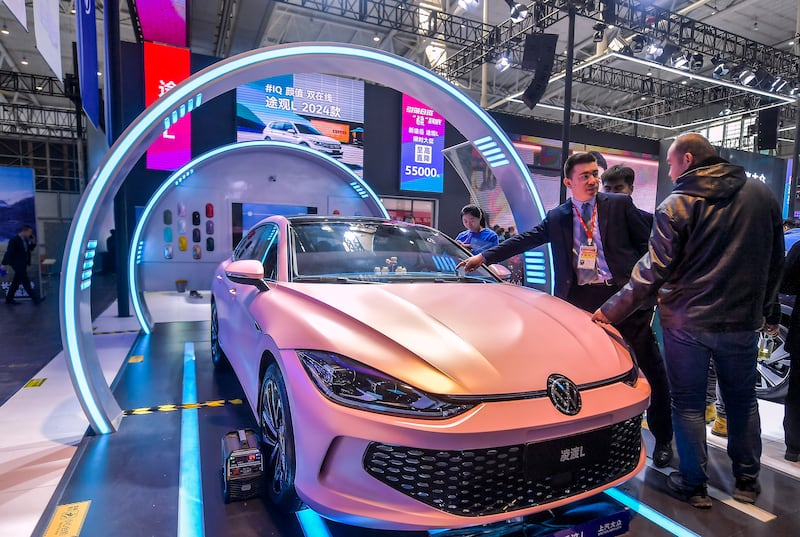
“While many SVW [SAIC-Volkswagen] sites are underway or have already been converted to produce electric vehicles based on customer demand, alternative economic solutions will be examined on a case-by-case basis,” the statement said.
“This also applies to the joint venture site in Urumqi,” he added. “For economic reasons, the site was sold by the joint venture as part of the realignment. The same applies to the Turpan and Anting test tracks. [in Shanghai].”
The factory was sold to Shanghai Motor Vehicle Inspection Certification, or SMVIC, a subsidiary of state-owned Shanghai Lingang Economic Development Group, for an undisclosed amount, Reuters reported.
RELATED STORIES
Leaked audit of VW plant in Xinjiang contains flaws: expert
US lawmakers question credibility of Volkswagen forced labor audit
Volkswagen reviews Xinjiang operations as abuse pressure mounts
Volkswagen criticized after audit finds no evidence of Uyghur forced labor
Protesters disrupt Volkswagen shareholders’ meeting over alleged Uyghur forced labor
The sale comes two months after an expert who obtained a confidential copy of Volkswagen’s audit of its joint venture factory in Xinjiang said the document contained flaws that made it unreliable.
Volkswagen said in December 2023 that the audit of its Urumqi factory showed no signs of human rights violations.
But after analyzing the leaked audit report, Adrian Zenz, a senior fellow at the Victims of Communism Memorial Foundation in Washington, found that contrary to his claims, the audit did not follow international standards and was conducted by questionable examiners.
Zenz, a Xinjiang expert, concluded that the audit’s methodology was flawed and insufficient and that the report was “inadequate to meaningfully assess the presence or absence of forced labor at the factory.”
Zenz called the news “a great victory for the Uyghurs.”
“This measure was long overdue,” he told RFA. “Unfortunately, it took public pressure and exposed the full extent of the audit charade.”
Strong international pressure
Gheyyur Qurban, director of the Berlin office of the World Uyghur Congress who has led anti-Volkswagen activities, said Volkswagen’s withdrawal from Xinjiang was not due to economic reasons, but was linked to strong international pressure on the Uyghur issue.
He said the World Uyghur Congress, a Germany-based Uyghur advocacy group, had pressured the automaker to leave the region and forced it to defend itself to the international community.
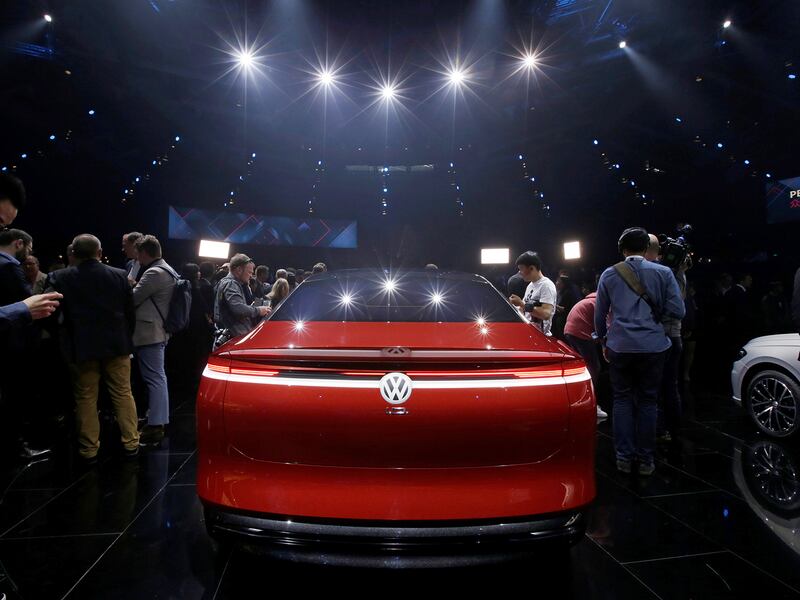
In the statement, Volkswagen also announced that it is extending its joint venture agreement with SAIC until 2040 to introduce new vehicles to meet the Chinese market’s growing demand for electric cars. The original agreement was in effect until 2030.
The news came as the G7 foreign ministers meeting issued a statement expressing concern over the situation of Uighurs in Xinjiang and Tibetans in Tibet being persecuted by the Chinese government.
The G7, or Group of Seven, includes the major industrial nations: Canada, France, Germany, Italy, Japan, the United Kingdom, the United States and the European Union.
“We remain concerned about the human rights situation in China, including in Xinjiang and Tibet,” said the statement, which urged China to uphold its international human rights commitments and legal obligations.
But Rushan Abbas, chairman of the executive committee of the World Uyghur Congress, said the carefully worded statement was insufficient.
“The genocide persists, conditions are deteriorating and concrete actions are lacking,” she said, referring to China’s violence against the Uyghurs, which the United States and some Western parliaments have recognized as genocide.
“While reducing supply chain risks is vital, this must be coupled with bold steps to hold China accountable for state-sponsored forced labor,” Abbas said. “Awareness demands action. We urge G7 countries to move beyond rhetoric and take the lead in holding China accountable for its human rights violations.”
Edited by Malcolm Foster.