


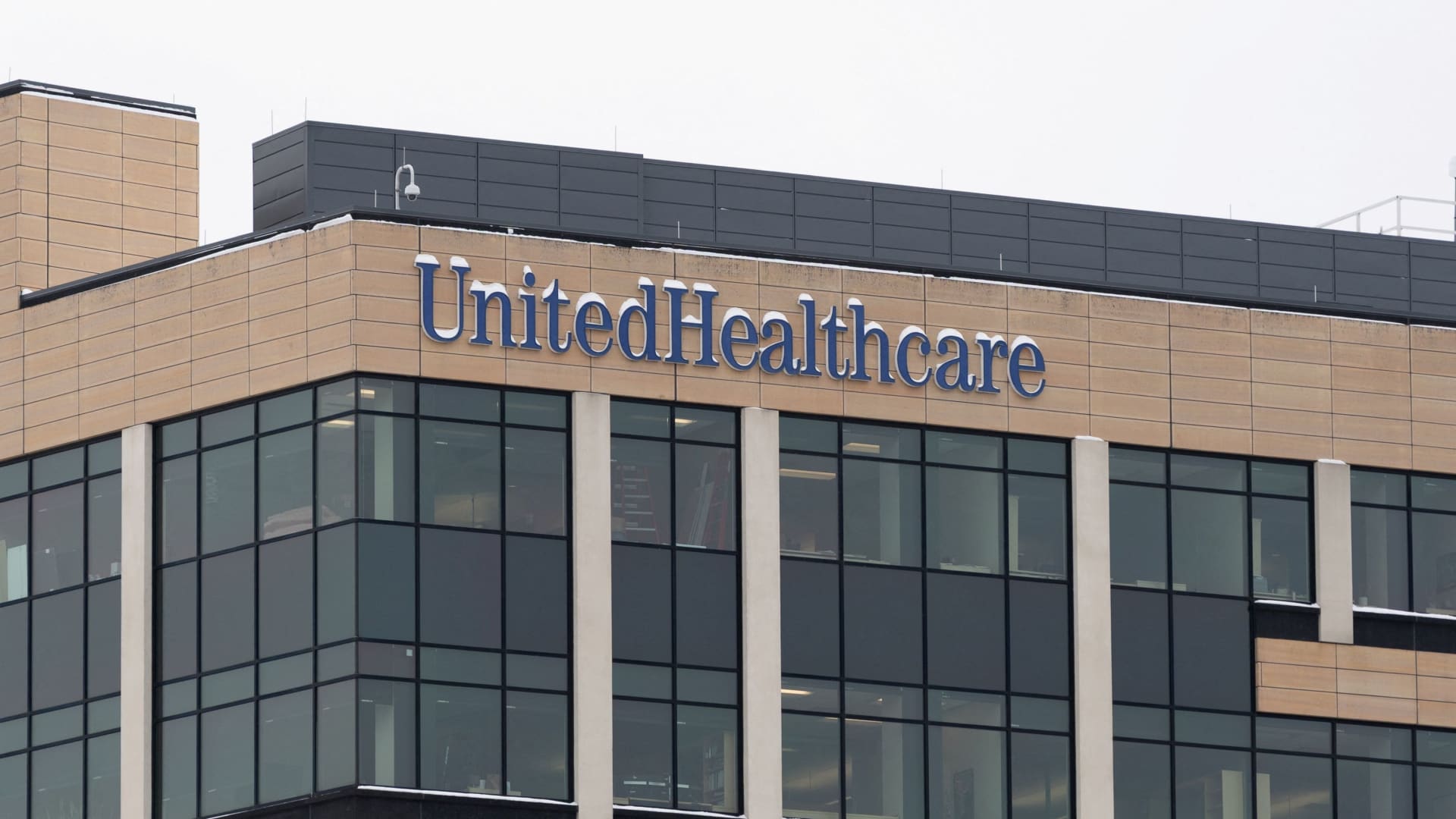
The UnitedHealthcare sign is displayed at its office building in Minnetonka, Minnesota, United States, December 11, 2025.
Tim Evans | Reuters
UnitedHealth Group on Tuesday reported first-quarter earnings that beat estimates and raised its profit outlook for 2026, as the company better manages high medical costs and streamlines operations.
The nation’s largest private insurer said it expects adjusted earnings of more than $18.25 per share for 2026, up from previous guidance of more than $17.75 per share. UnitedHealth is maintaining its full-year revenue guidance of more than $439 billion, which the company said in January reflects “an enterprise-wide right-sizing.”
Here’s what the company reported for the first quarter compared to what Wall Street expected, based on a survey of analysts by LSEG:
- Earnings per share: $7.23 adjusted vs. $6.57 expected
- Income: $111.72 billion versus $109.57 billion expected
UnitedHealth is banking on a new management team to carry out a recovery plan. The strategy involves reducing membership, selling the UK operations of its Optum healthcare unit, investing heavily in artificial intelligence, streamlining access to care and increasing transparency to restore profitability – as well as the company’s reputation – after a series of setbacks over the past two years.
The company reported first-quarter net income of $6.28 billion, or $6.90 per share, compared with $6.29 billion, or $6.85 per share, for the same period last year. Excluding items such as business divestitures, restructurings and an expected reduction in reserves for unprofitable contracts, UnitedHealth earned $7.23 per share.
Revenue rose to $111.72 billion from $109.58 billion in the year-ago quarter. The company’s insurer, UnitedHealthcare, and Optum both beat analysts’ sales estimates for the quarter, according to StreetAccount.
UnitedHealth notably appears to be better managing rising medical costs – an issue that has been a concern across the insurance industry for more than two years. Insurers, particularly those that run private Medicare plans, have been pinched by an influx of people seeking care they delayed after the pandemic and by expensive specialty drugs like GLP-1s, among other factors.
UnitedHealth’s medical benefits ratio – a measure of total medical costs paid compared to premiums collected – was 83.9% for the first quarter. This is an improvement from 84.8% recorded a year earlier. A lower ratio generally indicates that the company collected more in premiums than it paid out in benefits, resulting in higher profitability.
Analysts expected a ratio of 85.5% for the quarter, according to StreetAccount.
In a statement, UnitedHealth said the first-quarter ratio reflects its strong medical cost management and the release of funds previously set aside for unprofitable Optum contracts. But that improvement was partially offset by “persistently high” medical costs, the company noted.
“We continue to help simplify and modernize health care for the people and providers we serve, bringing more value, affordability, transparency and connectivity,” UnitedHealth CEO Stephen Hemsley said in the release.
The findings come just weeks after the Trump administration finalized a payment rate increase for Medicare Advantage plans for 2027, much larger than initially proposed, in an effort to boost UnitedHealth and other health insurer actions.