



Saks Global, the parent company of the 159-year-old department store that has become both a destination and a symbol of luxury fashion, has filed for Chapter 11 bankruptcy protection. Wednesday after unsustainable debt wiped out its business.
The company also announced that former Neiman Marcus CEO Geoffroy van Raemdonck would immediately take over as chief executive, replacing Richard Baker. He had only been in the role for two weeks, but had been involved with Saks since Hudson’s Bay acquired it in 2013, when he was CEO of the Canadian department store.
With van Raemdonck comes a revamped management team made up of veterans of Neiman Marcus, which Saks Global acquired in 2024. Darcy Penick, who served as president of Bergdorf Goodman before Saks bought the department store, will take over as president and chief commercial officer of Saks Global. Lana Todorovich, Neiman’s former chief merchandising officer, has been named head of global brand partnerships.
Prior to the filing, Saks secured $1.75 billion in new financing from a group of the company’s senior secured bondholders and asset-based lenders. The lion’s share, $1 billion, is debtor-in-possession financing that will be used to fund operations while the company is in Chapter 11, while an additional $500 million will be available to the company after it emerges from bankruptcy, which it has said it plans to do later this year. Its asset-based lenders provided another $240 million in additional liquidity.
The influx of new funds comes after Saks struggled to find DIP financing, which will be used to keep the company operating during Chapter 11 proceedings, CNBC previously reported. Without it, Saks faced liquidation, which could have meant the end of one of the most legendary department stores in history.
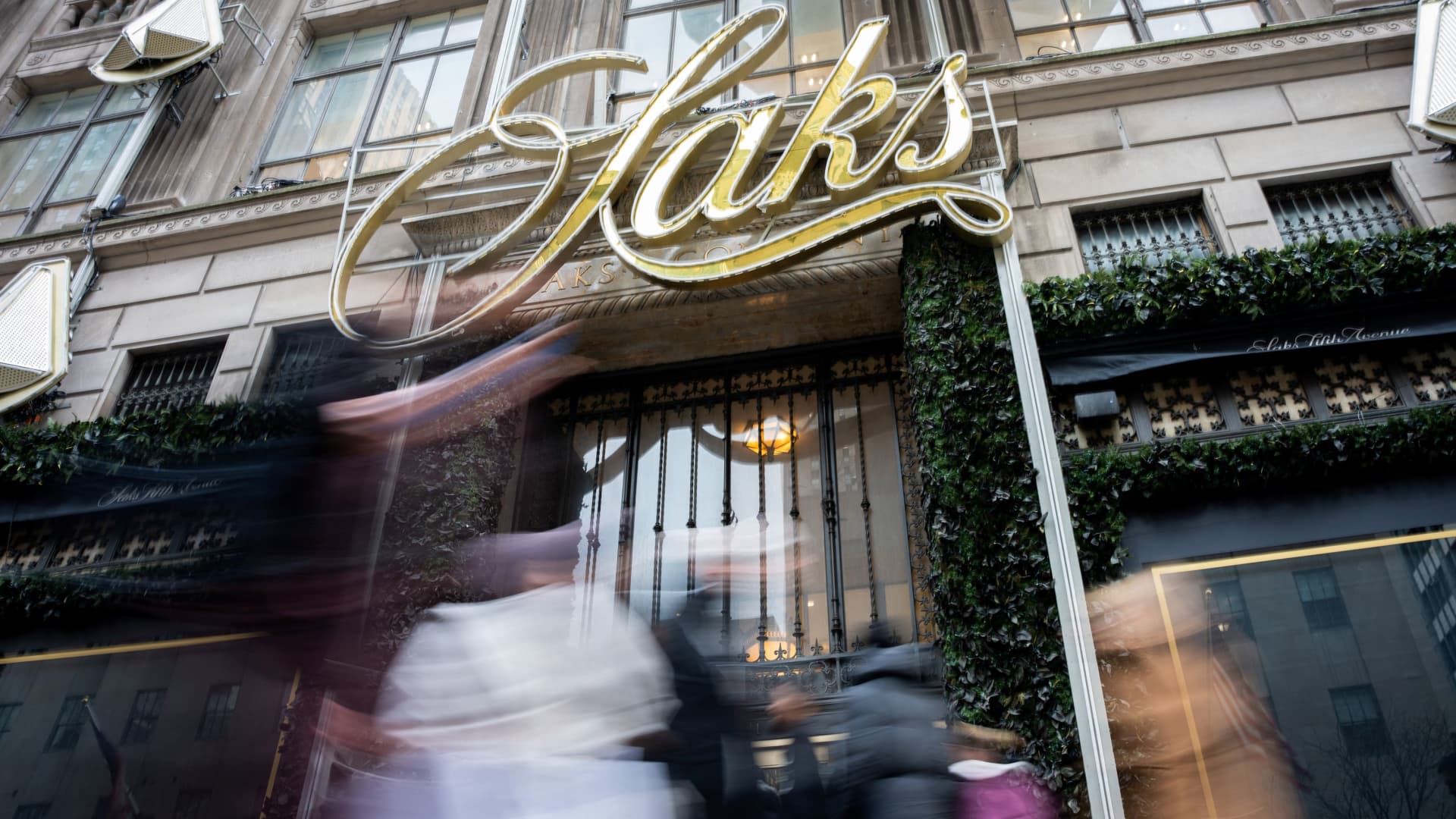
Shoppers walk past the Saks Fifth Avenue flagship store in Manhattan, New York, the United States, January 6, 2026.
Angelina Katsanis | Reuters
A bankruptcy filing for Saks Global was seen as inevitable for weeks after the company missed interest payments to bondholders late last month. What’s still unclear is what will happen to the company and the nearly 200 doors under its umbrella at Saks’ eponymous stores and its off-price chain, as well as Neiman Marcus and Bergdorf Goodman.
In a press release, the company said it was “evaluating its operational footprint” in order to place its resources where it saw the “greatest long-term potential.” This likely means a reduction in the store base in the coming months to reduce the company’s fixed costs.
“This is a defining moment for Saks Global, and the road ahead presents a significant opportunity to strengthen the foundations of our business and position it for the future,” CEO van Raemdonck said in a press release.
“In close partnership with these newly appointed leaders and our colleagues across the organization, we will navigate this process together with a continued focus on serving our customers and luxury brands.” I look forward to serving as CEO and continuing to transform the company so that Saks Global continues to play a central role in shaping the future of luxury retail.
How did Saks collapse?
Despite catering to some of the world’s wealthiest shoppers, Saks is regularly cash-strapped and unable to pay some of its bills after acquiring longtime rival Neiman Marcus in 2024 in a $2.7 billion deal heavily financed by debt.
Yet Saks was struggling to pay its suppliers even before acquiring Neiman. With the acquisition, the company received an influx of new cash expected to reduce the combined company’s debt and provide it with “significant liquidity,” Saks said at the time.
The tie-up brought in a new roster of deep-pocketed investors from the tech world, including Amazon and Salesforce, and is expected to create a luxury department store powerhouse with an improved cost structure and stronger negotiating power.
Instead, Saks failed to implement the turnaround that investors were counting on. It briefly improved in paying its suppliers, but then moved to a 90-day payment deadline, provoking anger and pushing back against brands who said the terms were too onerous to work for their businesses.
Soon she stopped paying her suppliers again, which led to a decline in assortment and sales.
Against this backdrop, Saks’ debt began trading below its face value, raising questions about the company’s ability to maintain operations and pay interest to bondholders, people familiar with the matter said. Over the summer, it secured $600 million in new financing and sold key real estate assets to raise more cash.
Although these efforts bought the company time, they ultimately did not prevent a bankruptcy filing.