


Mifepristone and misoprostol pills are pictured Wednesday, Oct. 3, 2018, in Skokie, Illinois.
Erin Hooley | Chicago Tribune | Tribune News Service | Getty Images
Just over a year after Donald Trump was re-elected president, the $6.9 billion abortion pill industry is operating under the same federal rules it inherited from former President Joe Biden — but new threats to the drug are growing.
Between a Food and Drug Administration safety review that could upend distribution, legal battles over whether the pill can stay on the market and anti-abortion rhetoric from activists and the Trump administration, drugmakers appear to be bracing for a storm that could reshape a profitable sector of the health care industry.
“When it comes to medication abortion, there haven’t been any major policy changes in this administration yet,” said Katie O’Connor, senior director of federal abortion policy at the National Women’s Law Center. “But we also saw signals from the administration that they were going to do something.”
For now, the FDA allows the pill, mifepristone, to be prescribed via telehealth and delivered by mail. Certified pharmacies still dispense them in about half of U.S. states, depending on state law.
Taken with misoprostol, mifepristone has been the standard dual therapy used in the United States for more than two decades and accounts for about two-thirds of abortions each year, according to the Guttmacher Institute.
Although Trump and many anti-abortion advisers have been in office for more than a year, the manufacturing of mifepristone has not diminished. And in September, the FDA quietly approved a generic version from Evita Solutions, the first new U.S. producer since 2019, to terminate pregnancies up to 10 weeks.
Yet analysts like Joe Thome of TD Cowenwhich covers the FDA, says there are more risks to the abortion market and access than meets the eye.
Even small changes in federal rules could ripple throughout the supply chain, from insurance reimbursement systems to telemedicine platforms and pharmacy compliance protocols, particularly for mifepristone manufacturers such as GenBioPro, Evita Solutions and Danco Laboratories.
“If the FDA were to add warning labels or more restrictive limits to treatment, then this could impact payer policies, Medicaid reimbursement, production and company performance and have implications for providing the drug to patients at an affordable rate,” Thome said.
How the FDA Could Shape Access
The FDA’s approval of Evita’s generic pill marked a rare expansion of the mifepristone market. The agency issued no press release or statement on the approval, a silence that Thome and many abortion rights advocates interpreted as an effort to avoid reigniting one of the nation’s most polarizing debates.
Drug stocks barely moved upon approval, in part because insiders anticipated it as a regulatory formality, O’Connor said. Under federal law, once a generic drug meets equivalence standards, meaning it acts the same way in the body as the brand-name version, the FDA has little discretion to block it, according to the Department of Health and Human Services.
“It took the anti-abortion movement a little by surprise, but it shouldn’t have. This is how the FDA is supposed to work,” O’Connor said.
Behind the scenes, Trump has appointed FDA officials sympathetic to anti-abortion groups since returning to office. In May, the agency launched a controversial safety review of mifepristone at the request of HHS Secretary Robert F. Kennedy Jr., which could lead to tighter restrictions on telehealth and mail-order sales, require in-person doctor’s prescriptions for the pill or even remove the drug from shelves.
The FDA did not detail the scope or timing of the review. Some experts have criticized the studies cited to justify the review as methodologically flawed; Laurie Sobel, associate director for women’s health policy at KFF, told CNBC it’s “junk science.”
Trump has other levers beyond the FDA if he wants to restrict access, experts said.
Chief among them is the reactivation of the 19th-century Comstock Act, a dormant law prohibiting the mailing of “obscene” materials, including abortifacient drugs. The Biden administration has interpreted it restrictively to allow shipments of pills to states where abortion is legal. But Trump’s Justice Department could reinterpret the law more broadly to block mifepristone shipments nationwide.
Mifepristone has a 25-year history of safety for terminating pregnancies in the United States. Since 2021, the FDA has allowed telehealth and mail-order prescriptions, making abortions cheaper and more accessible, especially for women far from clinics or in states that restricted the procedure after Dobbs v. Jackson Women’s Health Organization, the Supreme Court decision that overturned the right to abortion enshrined in Roe v. Wade.
Meanwhile, pharmacies like CVS And Walgreens have not stopped prescribing mifepristone in legal states, although both maintain strict controls to limit liability.
“The more stigmatized these drugs are, the more likely pharmacies themselves are to be stigmatized simply by providing the drugs,” said R. Alta Charo, professor emeritus of law and bioethics at the University of Wisconsin at Madison. “At some point, these pharmacies may say we don’t want to get involved in this, and they may just decide not to stock the drug.”
However, Costco announced in August that it would not sell mifepristone in its store pharmacies, citing low demand from its members and other patient customers.
Dr. Franz Theard watches a patient take mifepristone, the first drug used in a medical abortion, at the Women’s Reproductive Clinic of New Mexico in Santa Teresa on January 13, 2023.
Evelyn Hockstein | Reuters
How drugmakers are responding
Within the industry, drugmakers like Danco Laboratories, GenBioPro and Evita Solutions appear to be taking steps that could likely soften the blow of any crackdown on mifepristone.
Danco Laboratories is seeking FDA approval to expand the approved use of mifepristone to include the management of miscarriages, The Wall Street Journal first reported. Evita and GenBioPro are also exploring new hormone therapy products.
“Companies don’t always seek formal regulatory approval for secondary or tertiary use, because doing so requires going through another round of incredibly expensive clinical trials,” Charo said. “But if they do, then they get an advantage.
GenBioPro also remains involved in a lawsuit against the FDA and the state of West Virginia starting in 2023, arguing that the state’s ban on mifepristone conflicts with federal approval authority, a concept known as “federal preemption.” The case remains on appeal, but more litigation would likely follow if future federal guidelines restrict telehealth access to mifepristone.
“There has been a lot of litigation around mifepristone in recent years, and pharmaceutical companies are very uncomfortable with the idea of a court telling the FDA how to act,” Caroline Sacerdote, a trial attorney at the Center for Reproductive Rights, told CNBC. “That’s not protocol.”
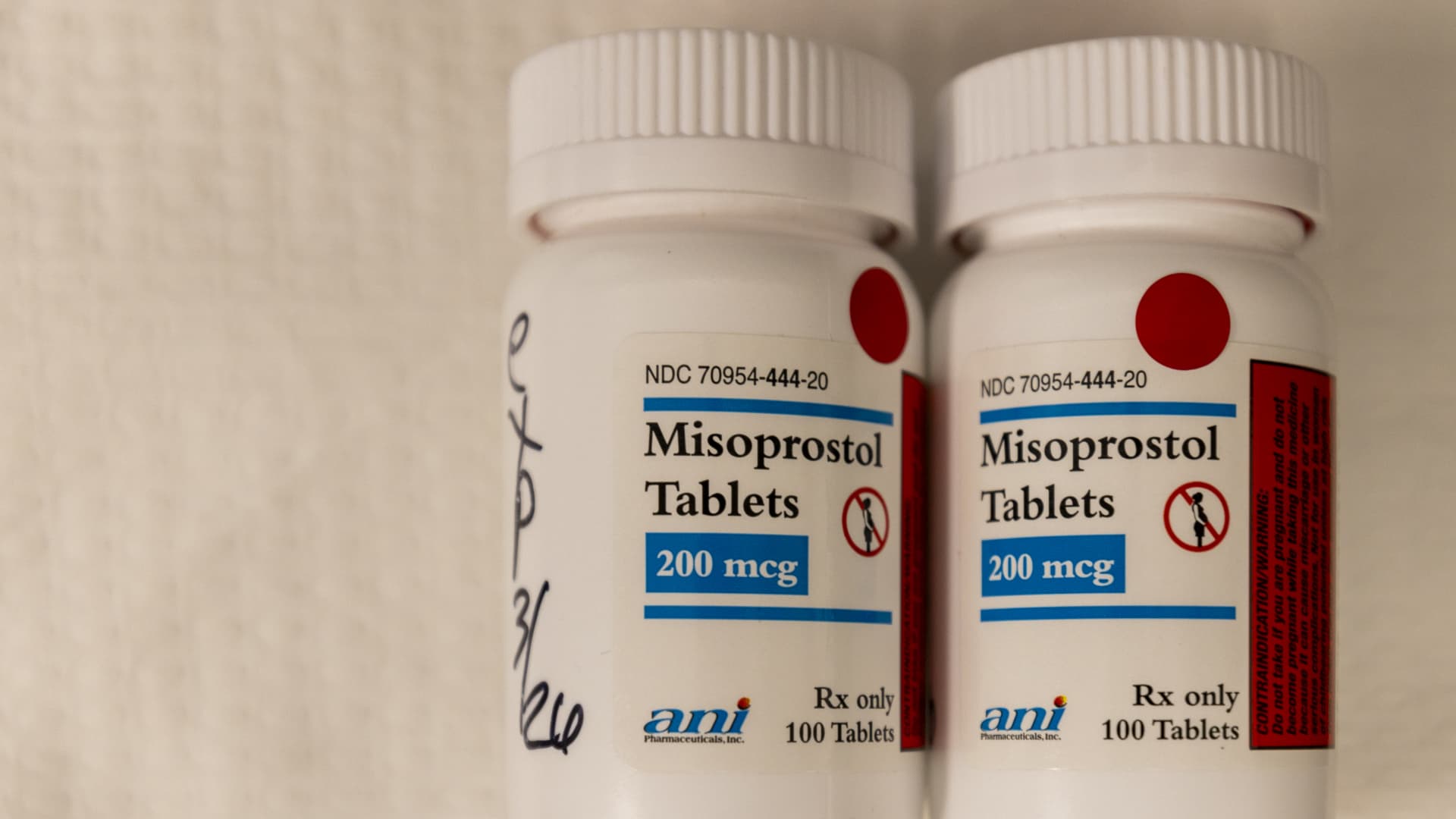
Misoprostol, one of two drugs used in medical abortion, is on display at the Women’s Reproductive Clinic, which provides legal medical abortion services, in Santa Teresa, New Mexico, June 17, 2022.
Robyn Beck | AFP | Getty Images
State-level differences in access to the abortion pill
As drugmakers take stock of potential federal changes, they must navigate a wide range of state policies.
The number of abortions in states with total bans or early gestation limits saw a sharp decline immediately after the Supreme Court’s Dobbs ruling in 2022, but has seen a slight decline since Trump took office, according to the Guttmacher Institute. Nationally, the number of abortions increased in 2023 and 2024, even with bans on this surgical procedure in a dozen states.
No state has enacted a new ban on medication abortion since Trump’s election. In fact, voters in seven states have approved ballot measures to protect abortion rights, often by enshrining them in their state constitutions. However, in a few states, enforcement of pre-existing bans on abortion has tightened.
Texas, Louisiana, and Idaho have expanded penalties for mailing abortion pills, while Texas’ “bounty hunter law” allows private citizens to sue anyone who helps facilitate an illegal abortion — even by counseling or mailing pills.
These measures are the subject of a number of ongoing lawsuits. Still, banning mail-order pills has proven difficult to implement, Charo said. The U.S. Postal Service does not proactively help states enforce bans or screen mail for pills, and federal law dictates what the USPS can or will do, making it nearly impossible for state authorities to intercept packages without federal assistance.
Still, the mere possibility of legal action has served as a deterrent to providers who are afraid to prescribe mifepristone, via telehealth or mail, to patients across state lines where the drug is legal but surgical abortion is not.
“Louisiana charged a New York doctor for providing a medical abortion via telehealth to a person in Louisiana. Texas prosecuted a New York doctor for doing the same thing,” O’Connor said. “In itself, that has a very serious disincentive for doctors who feel comfortable prescribing as well.”
Meanwhile, states like California and New York have strengthened “safe harbor laws” that protect providers treating patients outside their state. Still, funding cuts, staffing shortages and increased out-of-state demand have forced some clinics to close their doors.
“Whether abortion is legal or not, clinics are struggling to stay open,” said KFF’s Sobel. “The Big Beautiful Bill reduced funding for Planned Parenthood and other family planning services… It is also the restrictions on federal funding that are impacting the capacity of clinics that regularly see Medicaid patients.”